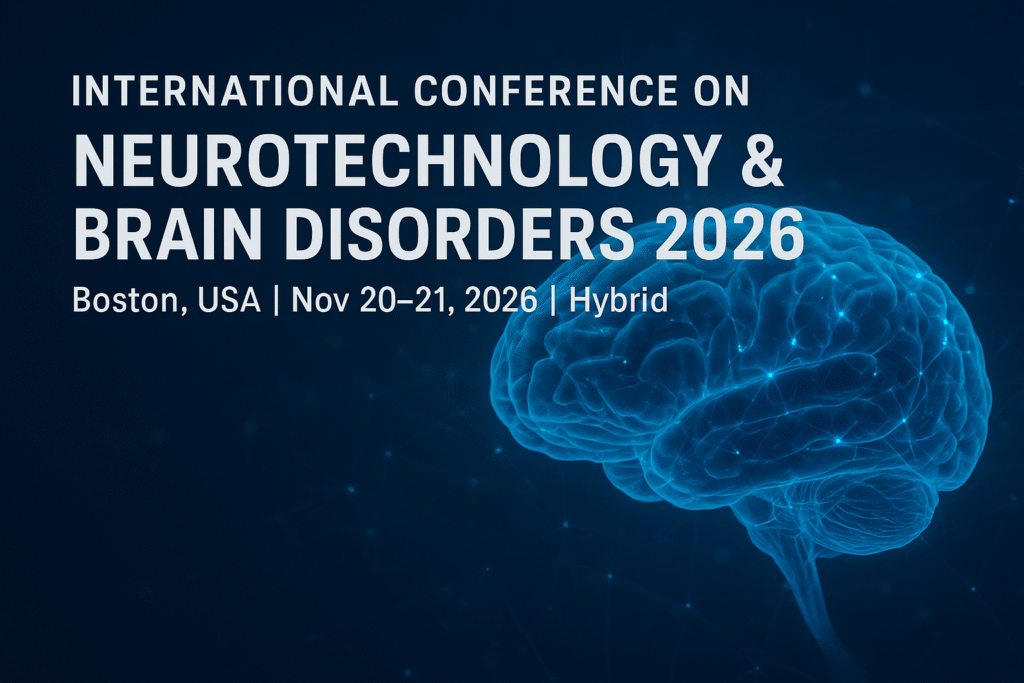

The International Conference on Neurotechnology & Brain Disorders 2026 stands as a landmark global event dedicated to advancing the understanding of neurological science, neurotechnology innovations, and clinical approaches for complex brain disorders. Scheduled to bring together researchers, clinicians, engineers, scientists, and industry experts, this conference is designed to bridge the gap between technology-driven neuroscience research and real-world medical applications.
As the burden of neurological diseases continues to grow worldwide, international platforms like this conference play a crucial role in promoting collaborative research and developing innovative tools for diagnosis, treatment, and long-term patient care. The event also aligns closely with other global gatherings such as the International Conference on Neurotechnology 2026, the Brain Disorders Conference 2026, and the Global Neurology Summit 2026, all of which emphasize the urgent need for technological integration in modern neuroscience.
The Rising Importance of Neurotechnology in Modern Healthcare
Neurotechnology is rapidly transforming the landscape of healthcare, particularly in the field of neurology. The Neurotechnology Conference 2026 highlights how advanced tools—such as neuroimaging, brain–computer interfaces, neuromodulation therapies, and predictive AI systems—are reshaping clinical decision-making. These technologies are no longer experimental but are now part of regular neurological practice in many centers around the world.
From early diagnosis using AI-enhanced imaging to personalized therapy using neuromodulation devices, neurotechnology now enables clinicians to detect subtle changes in brain structure and function long before symptoms escalate. This shift from reactive to proactive healthcare is one of the key themes explored throughout the event.
Understanding Brain Disorders in a Complex World
The Brain Disorders Conference 2026, which intersects closely with this event, emphasizes the global rise in neurodegenerative and neuropsychiatric conditions. Disorders such as Alzheimer’s disease, Parkinson’s disease, epilepsy, multiple sclerosis, traumatic brain injury, and stroke continue to impose significant human and economic challenges.
This conference explores:
-
The genetic and environmental causes of brain disorders
-
The role of biomarkers in early detection
-
Advances in therapeutic strategies
-
Neuroinflammation and its role in disease progression
-
The integration of neuroscientific data for personalized care
With sessions led by world-renowned neurologists and neuroscientists, attendees gain insights into both the biological complexity and medical solutions for these disorders.
A Key Component of the Neurology Conference 2026 Ecosystem
The larger scientific ecosystem also includes the Neurology Conference 2026, which focuses on clinical neurology, patient-centered care, and evidence-based therapeutic innovations. Together, these conferences create a unified global movement toward improving brain health through advanced research and interdisciplinary collaboration.
While the Neurology Conference emphasizes clinical practice, the International Conference on Neurotechnology 2026 highlights technological and engineering advancements that support neurological care. This multi-layered structure ensures that participants gain a complete understanding—from basic neuroscience research to clinical implementation.
Scientific Sessions and Focus Areas
The event features carefully curated sessions designed to represent the entire spectrum of neurotechnology and neurological research.
1. Advanced Neuroimaging & Diagnostics
This track covers:
-
Functional MRI (fMRI)
-
Diffusion tensor imaging (DTI)
-
PET-CT brain mapping
-
AI-driven image interpretation
-
Early disease prediction using machine learning
Advances in neuroimaging provide clinicians with deeper insights into brain structure, connectivity, and real-time function.
2. Neuroengineering & Brain–Computer Interfaces (BCI)
The technological revolution in neuroscience is highlighted in sessions on:
-
Neural signal decoding
-
Cognitive enhancement technologies
-
Neuroprosthetics for mobility
-
Communication devices for paralyzed patients
-
Wearable neural sensors
These emerging solutions are part of the global conversation at the Neurotechnology Conference 2026.
3. Neurodegeneration & Aging Brain Research
This session explores:
-
Mechanisms of Alzheimer’s disease
-
Parkinson’s disease biomarkers
-
Cognitive decline and aging
-
Neuroprotective drug development
-
Early diagnosis through precision biomarkers
Researchers from top neuroscience institutions share groundbreaking findings that are shaping the future of neurodegeneration treatment.
4. Neuromodulation & Therapeutic Technologies
This area focuses on innovative treatment options such as:
-
Deep brain stimulation (DBS)
-
Transcranial magnetic stimulation (TMS)
-
Vagus nerve stimulation
-
Personalized neuromodulation mapping
-
Closed-loop stimulation devices
These therapies represent the future of non-invasive and minimally invasive neurological care.
5. Mental Health, Neuropsychiatry & Digital Neuroscience
As mental-health challenges rise globally, sessions in this category explore:
-
AI-powered mental health diagnostics
-
Digital therapeutics for anxiety and depression
-
Neuropsychiatric disorders and brain circuitry
-
Neurocognitive rehabilitation tools
-
Technologies supporting youth mental health
This theme aligns with broader discussions happening across the Neuroscience Conference 2026, which brings neuroscientific, technological, and psychological perspectives together.
Why Attend This Global Neurology Summit 2026?
The event also forms a major part of the larger Global Neurology Summit 2026, where multidisciplinary experts unite to share knowledge, exchange ideas, and build international collaborations.
Key benefits include:
✔ Access to cutting-edge scientific knowledge
Stay updated with the latest research in neurotechnology, neurosciences, and brain-disorder treatments.
✔ Global networking opportunities
Connect with neurologists, neuroscientists, engineers, AI experts, and researchers from more than 50 countries.
✔ Hands-on workshops & technical demonstrations
Experience real-time neurotech tools, AI software, and neuromodulation devices.
✔ Research presentation & publication
Present your work, share findings, and gain recognition at an international scientific platform.
✔ Hybrid participation (In-person + Virtual)
The hybrid format ensures accessibility for global attendees.
These benefits make this event an essential destination for professionals seeking career growth, knowledge enhancement, and research visibility.
A Shared Vision for the Future of Brain Health
As neurotechnology continues to evolve, the intersection of neuroscience and engineering offers new hope for millions living with brain disorders. The International Conference on Neurotechnology 2026 and Brain Disorders Conference 2026 share a common goal—to harness the power of innovation for improved brain health worldwide.
This event stands as a major knowledge hub within the global community, connecting the vision of the Neurology Conference 2026 and the Neuroscience Conference 2026 while contributing to the broader framework of the Global Neurology Summit 2026.
Together, these conferences represent a unified international commitment to advancing brain science, enhancing patient care, and shaping a healthier neurological future for all.